
Quality and Naturalness in Olive Oil
Technical Data File
You can access the technical data regarding the quality of AidaOliveOil here.
Storage Conditions
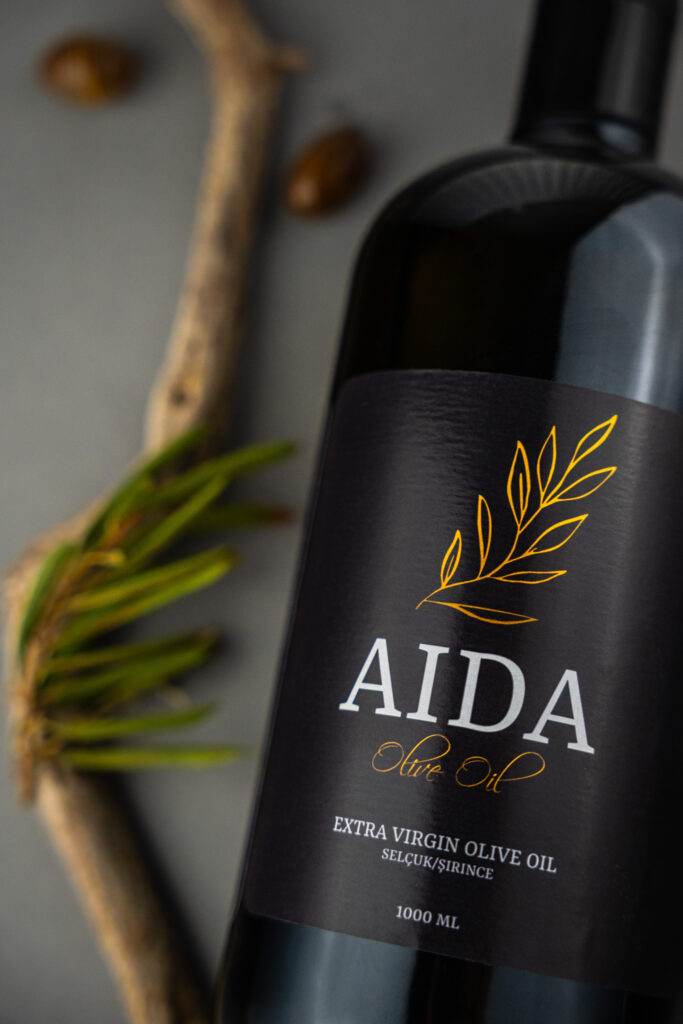
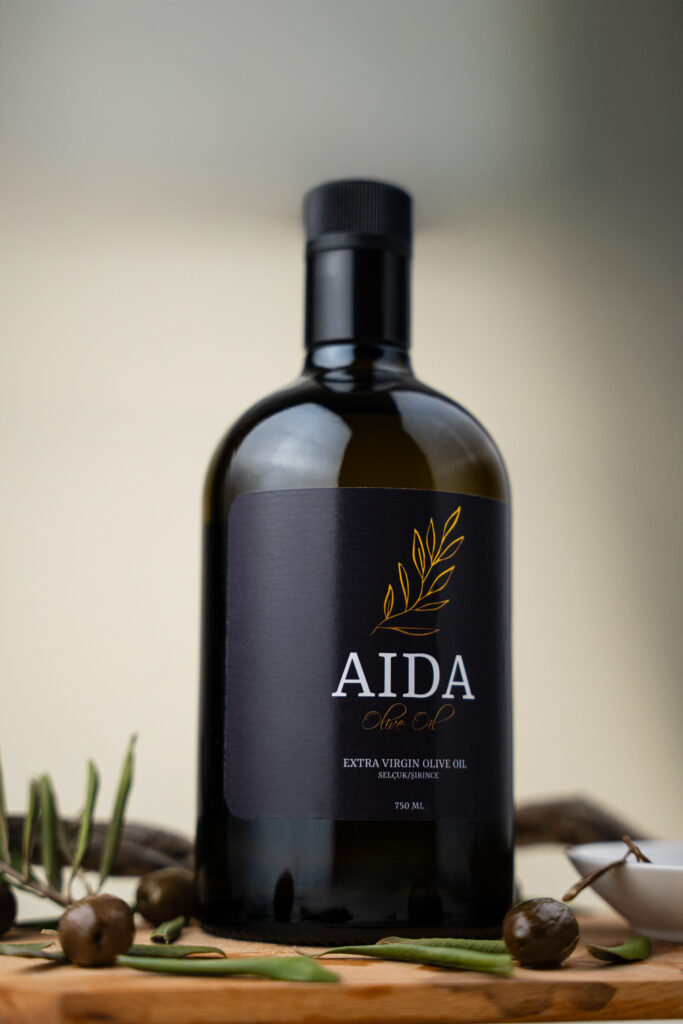
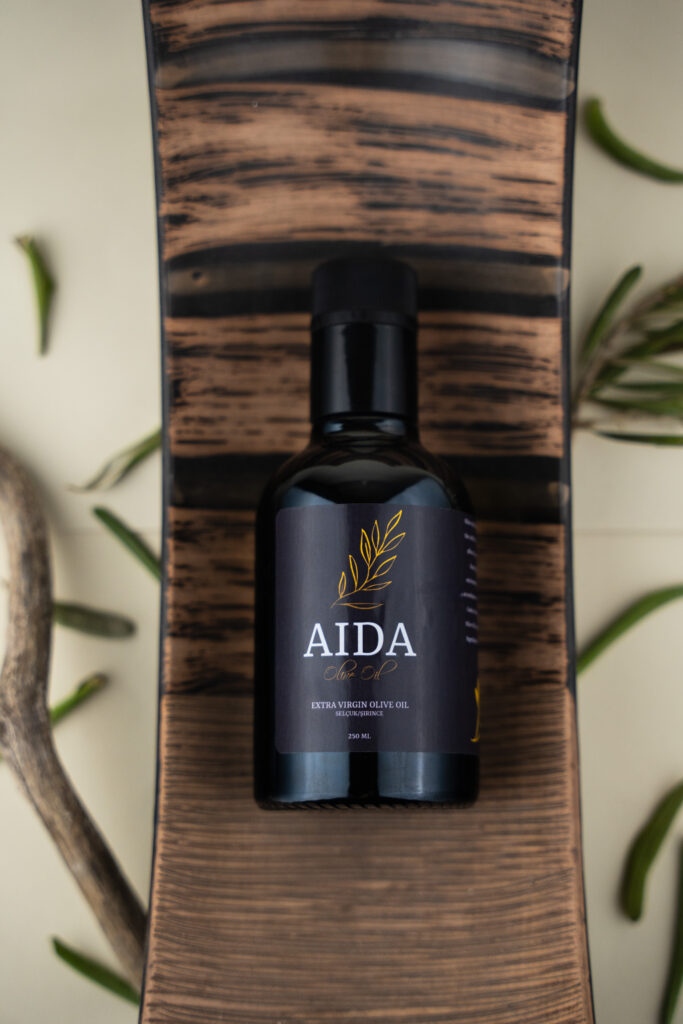
Store olive oil in a dark glass bottle in a cool cupboard away from light and heat. This will preserve its fresh aroma and nutritional value.
Cold Consumption
Enjoy it raw on your salads, appetizers or bread to experience both its flavor and antioxidant benefits at the highest level.
Cooking Suggestion
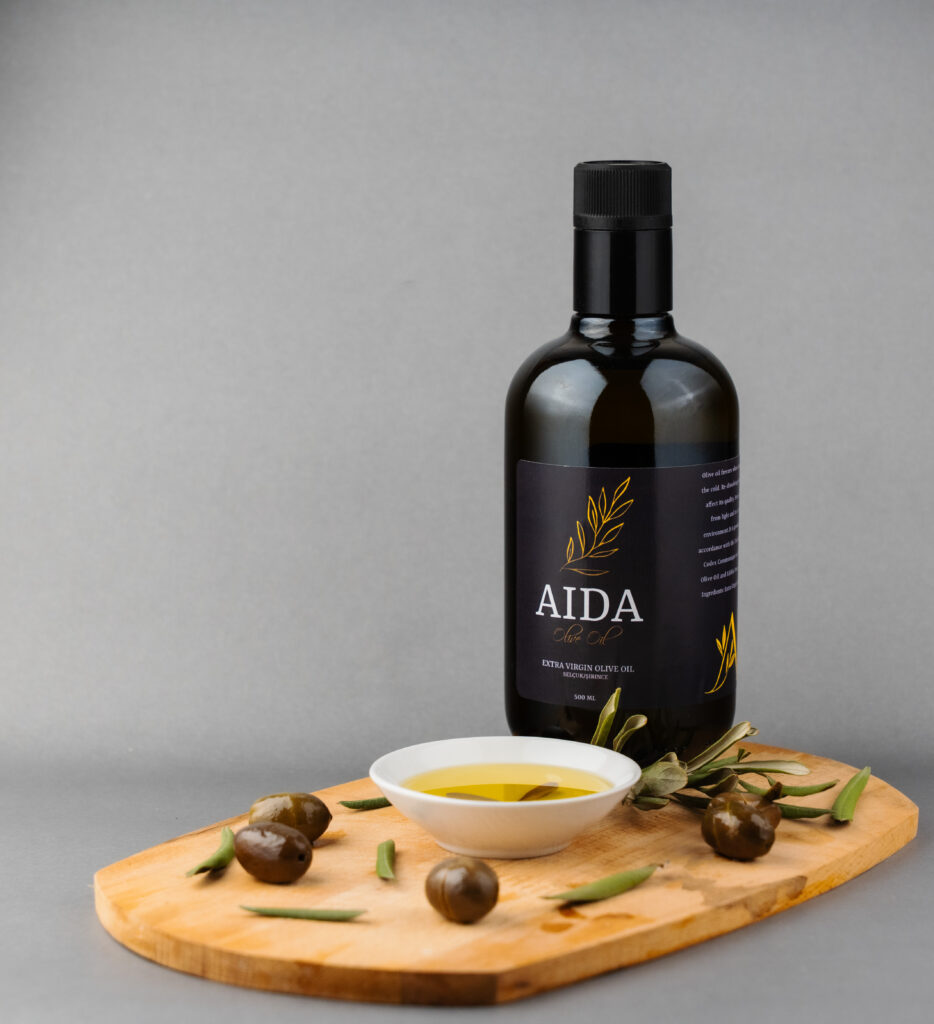
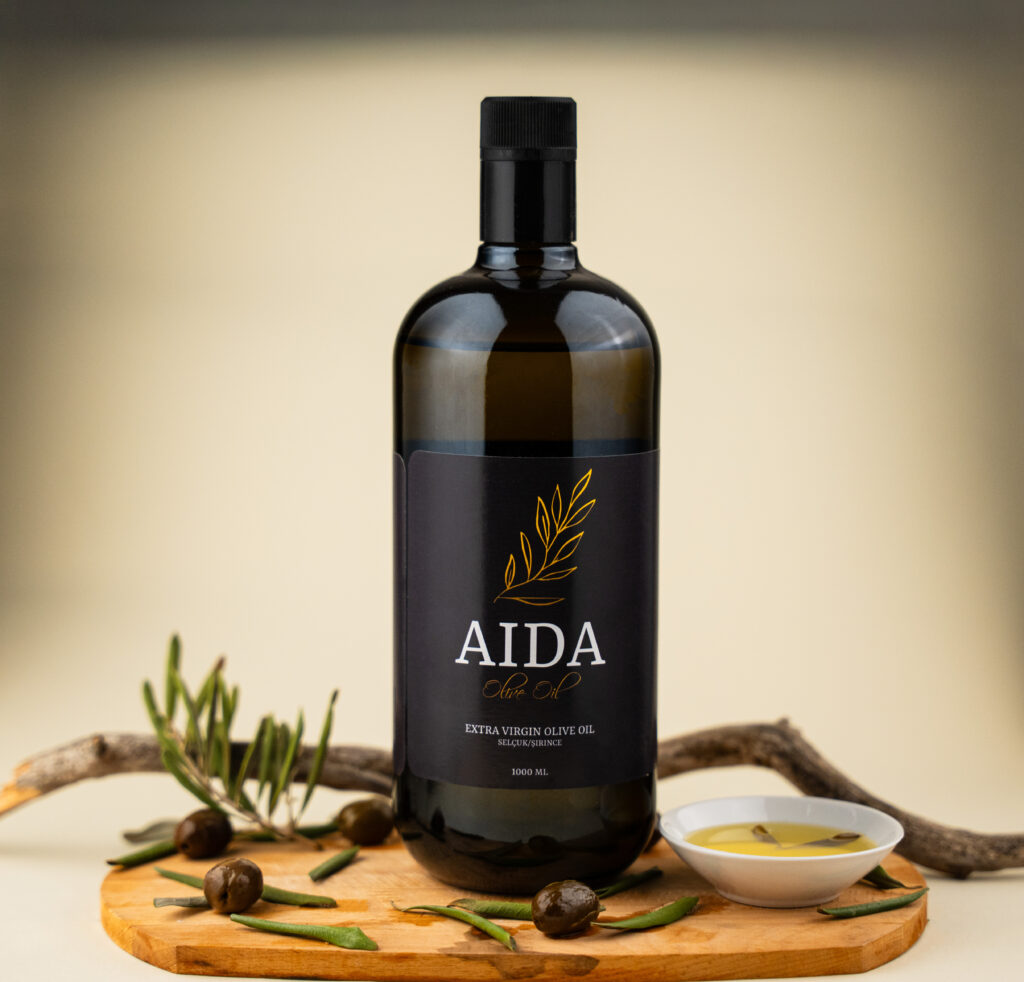
When sautéing and lightly frying, be careful not to exceed 180°C. This minimizes the formation of trans fats even at high temperatures.
Healthy Contribution
By adding 1-2 tablespoons to each meal portion, you will provide your daily balance of vitamin E, phenolic compounds and unsaturated fatty acids.
Olive Oil Handbook
Olive Oil Quality: Every Stage is Important, from Production to Consumption
Olive oil quality is determined by the olive variety, growing and harvesting methods, processing processes, and storage conditions. Each stage affects the product’s flavor, aroma, and nutritional value.
Harvest Process
Timing: Oil obtained from early, immature green olives offers low acidity and high quality. However, yields may be reduced.
Method: Harvesting olives without bruising and preventing them from falling to the ground is critical for quality.
Time: Harvested olives should be processed immediately.
Transportation: Olives should be transported in crates that do not exert pressure on them, and contact with heat, light, and oxygen should be minimized.
Oil Processing Stages
Cleaning: Leaves, stones, and other foreign materials are separated using compressed air and water.
Crushing-Kneading: Olive pulp must be processed below 27°C.
Decantation: The oil, olive oil, and olive pomace are separated by carefully controlling the amount and temperature of water.
Separation: The oil separated from the pulp must be processed at a lower temperature.
Storage Conditions
Olive oil should be stored between 10–15°C, away from light and oxygen. Stainless steel tanks and nitrogen gas are recommended.
Packaging
Dark-colored glass bottles should be preferred, and the cap should be tightly closed after opening. Filtering should be done immediately before packaging, and the product should be stored in a cool, dark place. The ideal shelf life is 2 years.
Quality Criteria
Chemical Analyses: Quality is determined by parameters such as free acidity, peroxide value, UV absorption, and ethyl esters.
Sensory Analyses: Fruitiness, bitterness, and pungency are positive attributes. Negative sensory attributes such as mold, oxidation (rancidity), and metallic flavors are considered defects.
Olive Oil Types
Natural Extra Virgin (EVOO): This is the highest quality oil. Free acidity should be ≤ 0.8% and peroxide ≤ 20 meq/kg. Suitable for raw and cooked consumption.
Natural First: Suitable for direct consumption, especially used in hot dishes.
Crude Oil: Suitable for refining and cannot be consumed directly.
Refined Oil: Purified through chemical processes and can be consumed directly.
Riviera: A blend of refined and natural oils.
Discover the delicious flavor of AidaOliveOil!
Take action now to experience our natural olive oil and place an order.